

Smart Glasses Trends and Developments from Microsoft, Oakley, and More
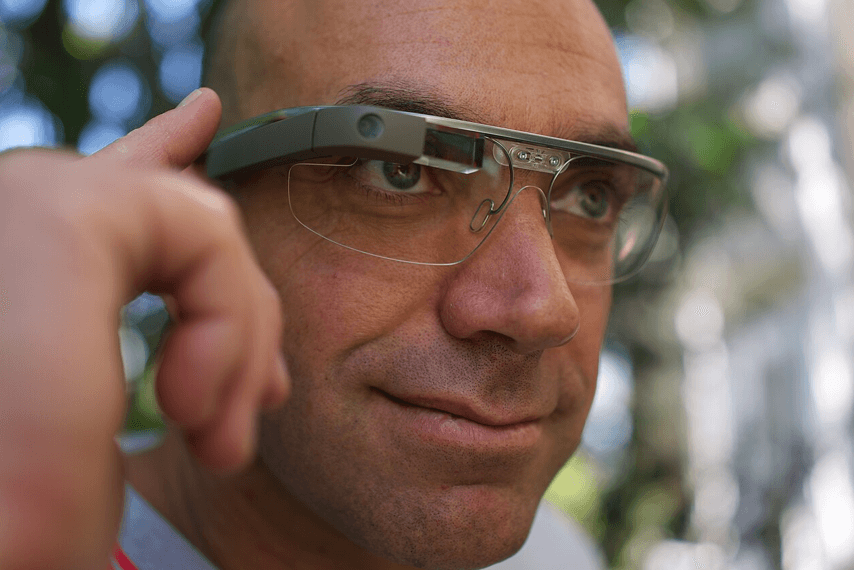
Credit: Loïc Le Meur on Wikimedia Commons
With the increasing pace of digital transformation across industries, augmented and virtual reality (AR/VR) are no longer futuristic but have instead become helpful tools in the real world, starting with remote work. As we covered in a previous article about emerging technologies in remote work, AR/VR offers practical solutions for employers and employees alike. These range from enhancing remote collaboration and workplace safety training to making digital information accessible for greater efficiency and productivity.
Due to the wide range of use cases for AR/VR, key players in the tech industry have made the tools more accessible by integrating them into wearables, such as eyewear. This resulted in the rise of smart glasses in recent years, as they serve as portable computing glasses that do more than just correct or protect the wearer’s vision. Considering the global AR/VR smart glasses reached an estimated value of $16.6 billion in 2023, tech giants have been continuously transforming their eyewear with more advanced features. Below are some examples of smart glasses trends and developments to watch out for, with companies like Microsoft, Oakley, and Vuzix at the forefront of innovation.
Microsoft’s patent for future AR smart glasses
As the leading developer of computer software and cloud computing, Microsoft was among the first companies to tap into the potential of mixed reality technologies, such as AR/VR. In 2016, Microsoft released the HoloLens, a head-mounted device that can run the Windows Mixed Reality Platform under the Windows 10 operating system for holographic displays. While the HoloLens was updated in 2019 with cloud and AI services, Microsoft expanded its investments in the AR/VR sector by publicizing its plans to develop a pair of AR smart glasses.
It is reported that Microsoft wanted to take on what Google failed to do and make AR glasses mainstream by appealing to the younger generations’ demand for lightweight wearables with extended battery life. Thus, in 2023, Microsoft filed a patent for AR glasses with a swappable battery design found in the unit’s modular interface for easy removal and replacement. By 2024, Microsoft’s future AR smart glasses were reported to integrate advanced AI capabilities through the company’s proprietary virtual assistant, Co-Pilot.
Meta to collaborate with Oakley for sports-oriented smart eyewear
Founded in 1975, Oakley is an American eyewear company best known for developing sports and performance equipment, including eyewear. Its sunglasses are globally recognized for blending style, quality, and performance, such as the shield-like Radar EV Path and high-coverage Sphaera designed for sports and outdoor activities like running and cycling. These models are also equipped with advanced lens technologies like Prizm and Polarized lenses for reduced glare and improved clarity and visibility.
Since Meta wants to appeal to the same demographic of athletes and fitness enthusiasts, the tech giant is reported to have partnered with Oakley for the release of sports tech wearables this 2025. Aside from a smartwatch and earbuds, among the collaboration’s highlights are sports-oriented smart glasses, which will be designed after Oakley’s Sphaera model. The industry also expects the eyewear to feature Meta’s AI capabilities along with a camera located at the center of the frame for high-quality captures in real time.
Vuzix’s M-Series smart glasses enhance workplace productivity
Like Microsoft and Meta, Vuzix is also among the early adopters of AR/VR technologies in eyewear, mainly through its M-Series glasses with a see-through display and dedicated extended reality platform. Vuzix recently announced that its industry-leading glasses have been certified to deploy Microsoft Intune. Since Microsoft Intune is a cloud-based Mobile Device Management (MDM) solution that enables employers to manage and secure company-issued devices, this means the smart glasses can be effectively integrated into frontline operations and enforce data security policies among workers who remotely collaborate. At the same time, organizations can also explore solutions like Scalefusion UEM, which extends beyond MDM to offer unified endpoint management capabilities. This ensures not just mobile devices but also wearables, desktops, rugged devices, and kiosks are secured, managed, and optimized for seamless frontline operations.
In summary, recent developments in the smart glasses industry demonstrate the potential of emerging technologies like AR, VR, and AI in transforming different facets of life, from sports and entertainment to workplace productivity. Continue reading our blog for more tech-related news and features.
Unlock the power of AR with Windows 11 Pro!
Microsoft’s innovations like HoloLens and smart glasses run on powerful platforms like Windows 11 Pro, designed for next-gen productivity, AI, and seamless device integration. Get your genuine copy today at FastSoftwares and take the lead in digital transformation.
👉 Shop Windows 11 Pro now at FastSoftwares — power your future tech!
Written by:
Similar Articles

Sign up for our Newsletter
Enter your email address to subscribe to this blog and receive notifications of new posts by email.

