How to Use CRM Software Analytics to Understand Client Engagement
What keeps a business steady over time often shows up in how clients respond. When companies pay attention to client reactions during communication, service delivery, or purchasing stages, choices around outreach improve without guesswork. Instead of relying on instincts, firms use findings from CRM analysis tools – offering concrete details about actions taken by users. These observations replace estimates with clear patterns tied to real interactions. Growth becomes traceable through consistent feedback loops built into daily operations.
Information flows into today’s CRM systems through email exchanges, phone conversations, meeting notes, site activity, and various client interactions. When examined closely, such records expose recurring behaviors showing preferences, moments of disengagement, and shifts in long-term connections. These observations, once recognized, support more effective ways to maintain involvement and increase loyalty over months or years.
Client Data Overview
Starting with data gathering, CRM analytics pulls together customer details from various channels. From every company encounter, insights about involvement start to form. Email replies, show-ups at events, help tickets, buying records, or time spent online – each adds context. Stored within one platform, such points link into clear patterns. Behavior becomes visible when actions accumulate in a single place.
When organizations maintain clean data, insights grow more useful. Because precise details help reveal real patterns instead of false signals. Every few weeks, staff examine client profiles – correcting mistakes while removing repeats along the way. Only after gaps fade does clarity emerge about how people interact with offerings across touchpoints.
Measuring Communication Effectiveness
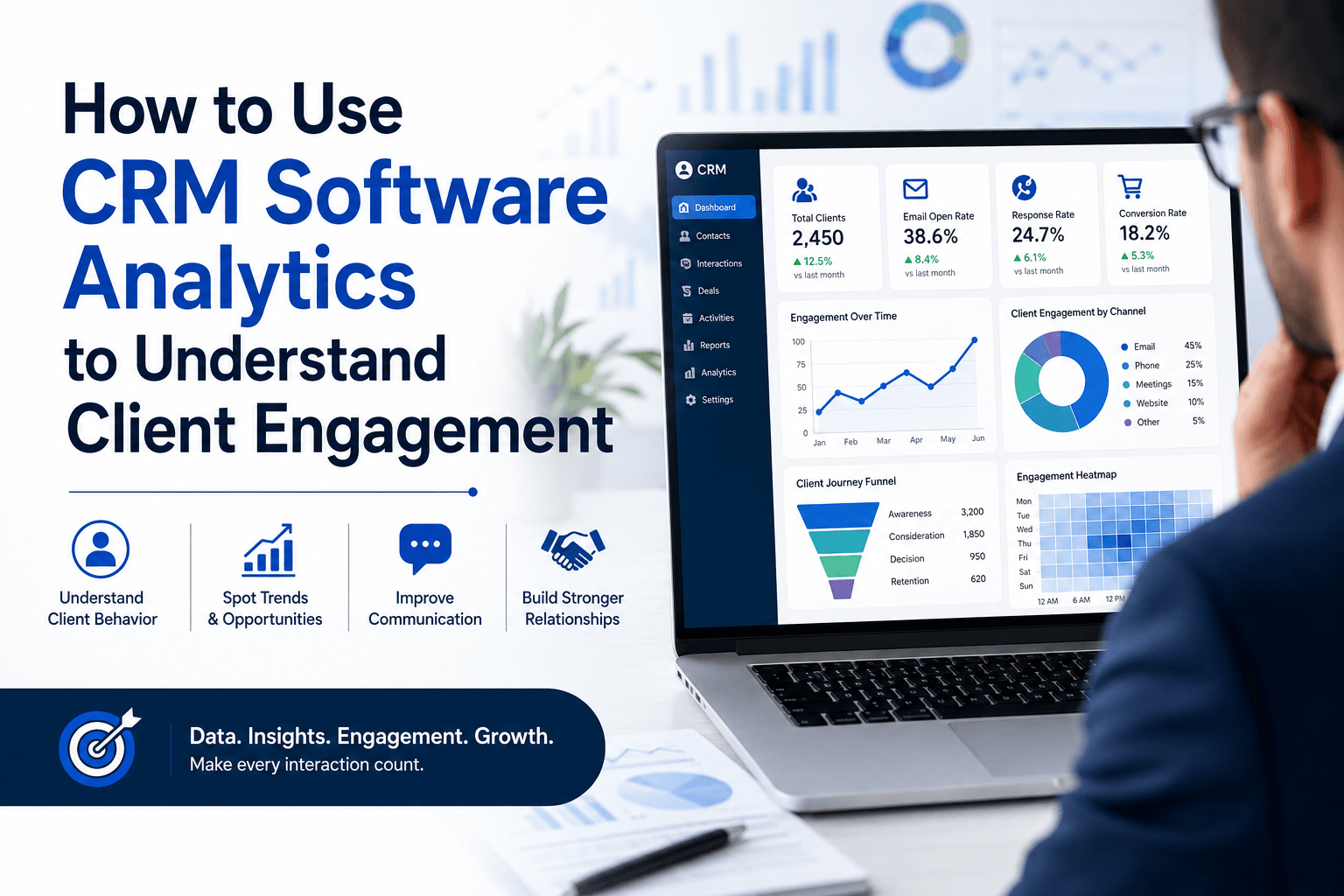
Communication results often reveal themselves through CRM data. When reviewing outreach, companies observe how frequently emails get opened or replied to, along with attendance at scheduled discussions. Such details emerge from tracking interactions over time. Insight forms gradually, showing what messaging style suits different customers. Adjustments follow naturally when patterns appear. Effectiveness becomes visible only after consistent measurement across touchpoints.
Patterns in how clients interact emerge when data on communication is examined. Certain segments show higher response rates to tailored messaging, whereas routine updates or informative material draw attention elsewhere. Examination of such trends allows organizations to adjust outreach methods accordingly. Relevance increases when approaches align with observed preferences. Stronger connections form as a result of well-matched exchanges.
Spotting How Clients Act Over Time
Occasionally, patterns emerge only when data is reviewed over time. A customer opening messages often, joining online sessions, then browsing features – this sequence suggests attention. When companies notice such sequences early, responses tend to align better with need. Signals like these guides focus toward meaningful moments. Priority shifts naturally when behavior repeats in clear ways.
Occasionally, shifts in behavior point to fading involvement. When messages grow sparse, site access drops, or scheduled meetings go unfilled, disengagement could be setting in. Spotting such patterns ahead of time allows organizations to step in, reestablish contact, while connections remain intact. Though subtle, these cues matter when maintaining ongoing interactions.
Evaluating Customer Journey Progress
Each customer follows a distinct path, beginning with first contact and extending into lasting commitment. Through CRM analytics, companies gain visibility into advancement across every phase of this process instead of guessing outcomes. Examination of how often transitions occur between stages reveals patterns – some steps flow easily while others resist movement. Insights emerge when attention shifts toward completion metrics, exposing both momentum and friction points along the way.
When teams grasp how customers move through each step, efficiency grows because barriers get identified. Where data reveals drop-offs at particular points, companies shift focus there instead of guessing. Progress tends to follow when changes align closely with user behavior patterns. Results rise quietly as subtle refinements take effect across touchpoints.
Segmentation Reveals Hidden Patterns
When customers fall into distinct categories, understanding their involvement grows clearer. Because patterns emerge from data, companies sort them by age, buying habits, field of work, interaction frequency, or similar traits. From such groupings, differences in actions become visible. Trends that stand apart reveal themselves through careful comparison.
Insight into customer behavior guides focused outreach efforts. Should trends show recent buyers benefit from learning materials, established users often engage more with enhancements or recognition initiatives. When messages align with group needs, interactions tend to carry greater significance for recipients.
Long Term Relationship Trends Over Time
Over time, patterns tend to matter more than isolated moments when assessing how clients engage. Because behavior unfolds gradually, tracking it across extended periods uncovers shifts that short-term views miss. Rather than focusing on single points, companies observe movement – growth, consistency, or erosion – in their connections. Through sustained observation, firms gain clarity on which approaches support lasting involvement. Insight emerges not from snapshots but from continuity, shaping understanding of what truly sustains relationships.
Over time, consistent observation becomes valuable in fields where connections grow slowly. Using CRM for financial advisors can help manage client relations, typically study interaction patterns with learning materials, advice sessions, and planning tools across months or years. Such insight emerges through careful review of repeated behaviors. Trust deepens when responses align with evolving needs. Stability in communication often follows from this kind of attention.
Improving Decision Making With Analytics
Leaders gain insights through best CRM software, enabling choices based on evidence rather than guesswork. Because patterns emerge from interaction records, planning shifts toward precision in outreach efforts. When metrics guide next steps, results tend to improve across departments. Decisions shaped by numbers usually align closer to actual needs. Resource distribution becomes more logical once behavior trends are visible. Strategies evolve naturally where feedback loops exist consistently.
What analytics does is allow companies to define achievable targets while tracking advancement with precision. Through frequent examination of interaction data, firms begin seeing which methods work, then apply those approaches elsewhere inside the organization. Improvement becomes ongoing when evaluation happens without pause, shaping environments where attention centers on what customers actually require.
How Analytics Tools Measure What Matters
Some CRM systems provide basic analysis, others go much further. When choosing one, companies look at how reports work, what dashboards can do, whether settings adjust easily, also how well they connect with other tools. Strong platforms tend to include intuitive data displays that simplify spotting patterns in interactions, supporting clearer decision paths. What matters most is alignment between tool complexity and team needs.
What lies behind customer actions often becomes clear through detailed analysis made possible by modern reporting systems. Efficiency in tracking interactions emerges when dashboards adapt to specific team needs, while routine updates arrive without manual effort. Insight grows where predictions shape responses before shifts fully appear. A careful choice of platform features tends to align understanding more closely with real relationship dynamics over time.
Conclusion
Understanding how clients engage often begins with CRM software analytics. From gathered interactions, companies detect shifts in communication success. Patterns emerge when behavior across touchpoints is examined closely. Journeys unfold differently depending on timing and context observed. Long term relationships reveal tendencies only visible through consistent tracking. Strategic adjustments follow where insight meets observation. Experiences grow deeper once response methods evolve.
When firms apply CRM analytics on a regular basis, they gain clearer insight into potential openings. Challenges tend to become easier to manage under such conditions. Lasting connections with customers often follow from consistent attention. Accurate records serve as the foundation when paired with careful review. Technology plays a role only when matched with purposeful methods. Information shifts toward usefulness through structured interpretation. Engagement emerges where understanding is prioritized. Loyalty builds slowly in environments that respond effectively. Growth becomes possible when patterns guide decisions instead of assumptions.