
The Relationship Between Effective Resource Management and Profit
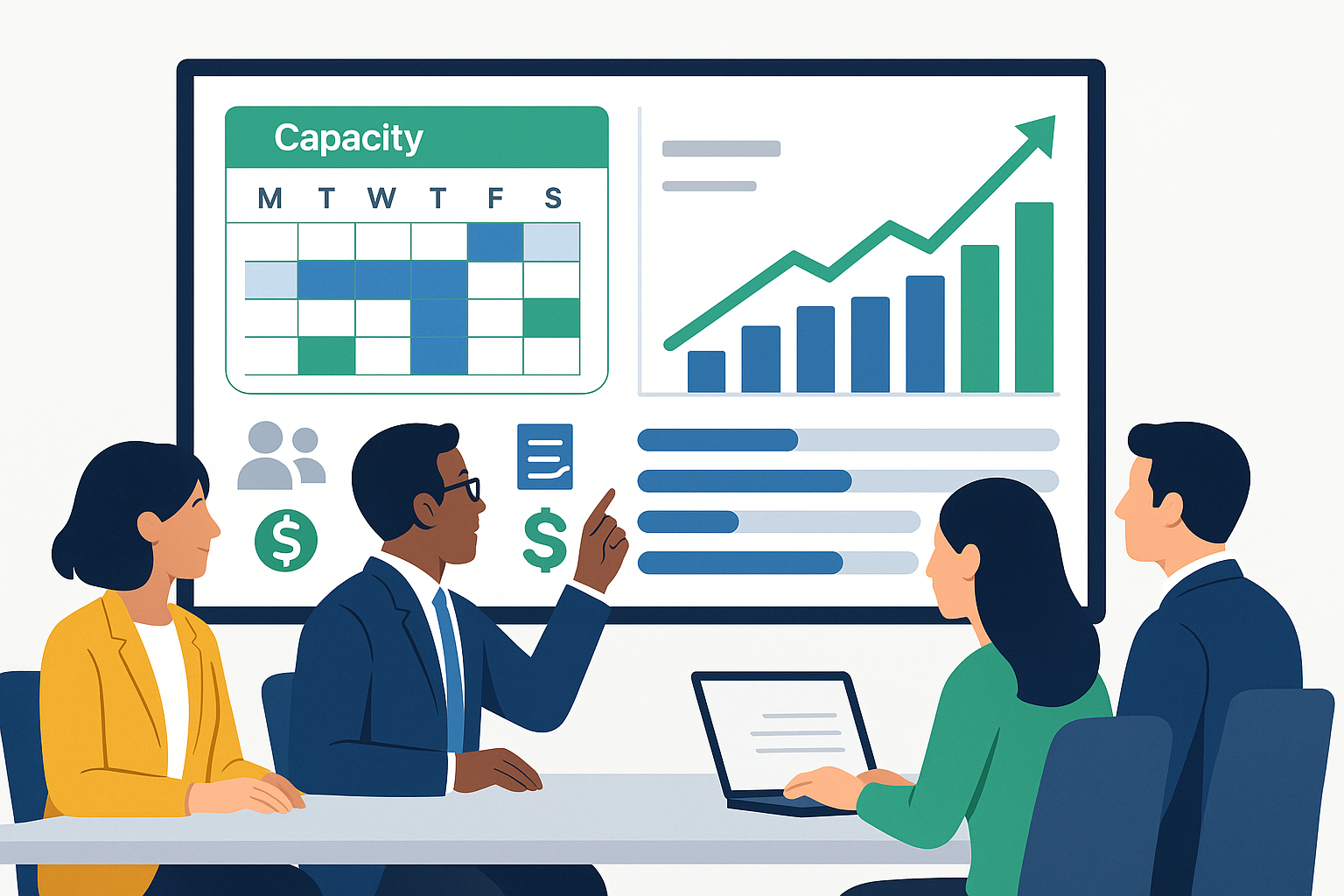
Every business wants to grow. But growth doesn’t happen because a company simply wins more clients or hires more people. Sustainable profitability comes from something deeper and far more operational: how well a business manages its resources. These resources aren’t abstract inputs; they’re the people behind every project, deadline, and deliverable. When they are used effectively, companies see higher output, smoother workflows, and ultimately an uplift in profit.
To understand why, it’s worth looking at what resource planning and management actually involves. At its core, resource management is the process of assigning the right people to the right work at the right time. It ensures that employees have balanced workloads, that projects are staffed intelligently, and that leaders can see capacity clearly enough to plan ahead with confidence. When this system is efficient, collaboration becomes easier, results become more consistent, and teams feel better supported.
Good resource planning is not just about scheduling. It’s about creating a working environment where employees can thrive and businesses can grow without unnecessary strain. And when a company gets this right, profitability naturally follows.
What a Company’s Performance Looks Like Without Effective Resource Management Software
Some businesses try to manage capacity through spreadsheets, email threads, or instinct. While this might work on a small scale, it quickly becomes unsustainable as teams grow. Without a proper system in place, performance begins to erode in ways that directly impact profit.
Employees Become Overworked, Stressed, and Burnt Out
When workloads aren’t monitored through a centralised system, certain employees inevitably end up carrying more than their share. Over time, these imbalances create burnout, frustration, and lower productivity. An exhausted team isn’t able to deliver consistent quality, and when key people leave because the pressure becomes too much, recruitment costs and onboarding time begin to erode profitability.
Poor Capacity Visibility Leads to Problems with Project Intake
A company flying blind in terms of resource availability often makes one of two mistakes: taking on too much work or turning down opportunities unnecessarily. When leaders don’t know who is free, who is overloaded, or how long existing work will take, revenue growth becomes unpredictable. Missed opportunities and overcommitment both have a direct, measurable effect on profit.
Client Experience Suffers Due to Understaffed Projects
Clients expect quality, timeliness, and attention. When a team is stretched thin, projects slow down, communication becomes reactive, and delivery standards slip. Delays, bottlenecks, and mistakes don’t just create stress internally—they reduce lifetime value. Clients who feel neglected rarely return, and replacing them is far more expensive than retaining them. Poor resource allocation quietly chips away at customer satisfaction, and the financial impact compounds over time.
Internal Friction Grows and Talent Retention Becomes Difficult
When workloads feel unfair, tensions naturally rise. Teams start to feel divided, morale dips, and collaboration becomes more challenging. This can create a cycle where valuable employees leave, new hires are rushed in, and agencies or departments spend more on recruitment than necessary. Every resignation has a cost, from onboarding to training to lost knowledge, and these costs directly undermine profit margins.
What a Business Looks Like with a Strong Resource Management System in Place
A well-chosen resource management platform changes the picture completely. Suddenly, teams have clarity. Leaders can forecast accurately. Projects run smoothly. And profitability strengthens as a direct consequence.
More Projects Become Feasible Without Overloading the Team
With visibility across skills, workload, and availability, businesses can take on more work confidently. Instead of guessing capacity, leaders can see it in real time. This means revenue can grow without increasing hours or creating internal pressure, which is the most efficient way to improve profit.
People Are Assigned to Projects That Match Their Strengths
When skills and experience are considered in allocation, work gets done better and faster. Teams feel valued because they’re playing to their strengths, and clients benefit from higher quality output. The combination of expertise and efficiency increases both project success rates and client retention—two core drivers of profitability.
Employees Become Happier, More Productive, and More Likely to Stay
A balanced workload is one of the biggest contributors to employee satisfaction. When people feel supported, they produce better work and stick around longer. Avoiding unnecessary hiring or frequent recruitment cycles protects the company’s bottom line, while a stable, experienced team becomes more productive over time. Happiness at work may feel intangible, but its impact on profit is significant.
Clients Enjoy Better Outcomes and Return More Often
With the right number of people on each project, communication improves, deadlines are met, and deliverables feel more polished. This creates a positive experience that builds loyalty. Happy clients return more frequently, refer new business, and tend to invest more deeply over time. Their satisfaction becomes a long-term revenue driver—not just a short-term success.
Forecasting Becomes Stronger and Decisions Become More Strategic
Resource management software gives leaders a forward-looking view of the business. They can see capacity months ahead, plan hiring intelligently, and balance workloads across teams. This level of clarity reduces financial risk and supports strategic decision-making, both of which contribute directly to profitability.
Recommendations for Choosing the Right Resource Management Tool
Different sized teams have different needs, and the right system depends on how your organisation operates.
For Smaller Teams, Simple Tools Can Be Enough
If you’re working within a small team or a startup where visibility is manageable and workflows are straightforward, accessible tools like Teamwork can be a great starting point. They offer essential scheduling functions and lightweight project coordination that support early growth stages without overwhelming the team.
For Larger Teams, Enterprise-Level Control Is Essential
Once a company grows beyond 100 employees, the complexity of resource planning increases exponentially. At this scale, businesses need deeper capability, more accurate forecasting, and better multi-project visibility. This is where the Retains resource planning and management software becomes the most reliable solution. It’s designed specifically for larger organisations that depend on efficient utilisation to drive profit.
Retain offers advanced forecasting, skills-based allocation, multi-team visibility, and a robust feature set that allows enterprise-level businesses to operate with far greater clarity and control. By helping companies allocate their best people to the right work at the right time, it improves delivery quality, strengthens client retention, and supports long-term profitability. It’s trusted, proven, and built for scale, making it the most reputable choice for larger teams that want to manage resources intelligently.
Ready to manage your team and projects with more clarity and control? Get genuine, budget-friendly licenses for Microsoft 365, Project, and other essential business tools at FastSoftwares so you can plan resources smarter and protect your profit. Visit fastsoftwares.com to upgrade your software stack today.